Best Electric Kettles for Coffee and Tea Nerds
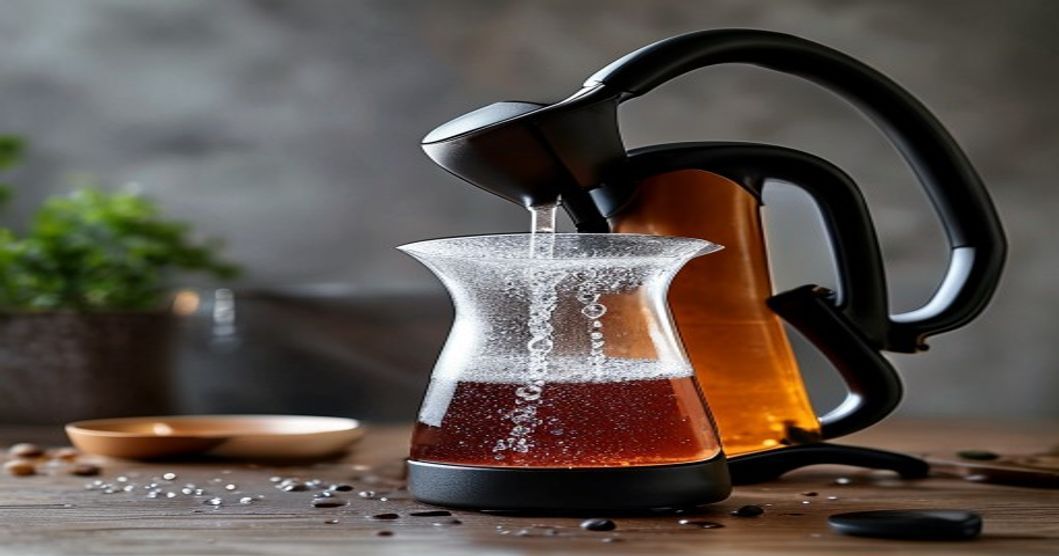
Fellow Stagg EKG
Variable temperature gooseneck, hold mode, matte black or stainless, $95-130 depending on finish. The kettle that turned my kitchen counter into a pour-over station and made me someone who talks about water temperature at parties. The gooseneck spout flows at exactly the right rate for pour-over — slow enough to control, fast enough to not lose heat. The built-in thermometer shows real-time water temperature, and hold mode keeps water at your set temp for 60 minutes.
Check price on Amazon →I have owned four electric kettles in five years. Two of them leaked. One had a gooseneck spout that poured like a garden hose. The fourth is still running — it's the Fellow Stagg EKG, and I bought it after the third one died mid-brew on a Saturday morning when I needed coffee more than I've ever needed anything.
Electric kettles are simple devices that manufacturers manage to mess up in surprising ways. Bad spouts that splash. Lids that scald your hand when you open them. Heating elements that give up after 18 months. Plastic interiors that make your tea taste like a swimming pool. Here's what actually works.
What Actually Matters in an Electric Kettle
- Spout type: Regular spouts pour fast and splash — fine for tea, terrible for pour-over coffee. Gooseneck spouts give you precision control over flow rate and direction. If you make pour-over, gooseneck is non-negotiable.
- Temperature control: If you drink green or white tea, you need variable temperature. Boiling water destroys delicate teas. If you only drink black tea and French press coffee, a basic boil-only kettle is fine.
- Interior material: Stainless steel or glass. Plastic interiors leach flavor over time and hold onto mineral buildup. Stainless is easiest to clean. Glass lets you see the water level but is fragile.
- Capacity: 0.8-1L is ideal for one person. 1.0-1.7L for two or more. Kettles over 1.5L are heavy when full and slow to heat.
- Speed: A 1500W kettle boils 1L in about 4 minutes. That's standard. Anything over 5 minutes is slow. Under 3 minutes means you're probably looking at a lower capacity or higher wattage than usual.
Our Top Picks
Fellow Stagg EKG — Best Overall (and Best for Pour-Over)
If you make pour-over coffee, this is the kettle. The gooseneck spout produces a thin, consistent stream that makes it easy to bloom your grounds evenly and control extraction. The variable temperature dial goes from 135°F to 212°F in one-degree increments, and the hold mode keeps your water at the set temperature for 60 minutes — meaning you can set it to 200°F, walk away, and come back to water that's ready for your second cup.
The build quality is the best I've seen in a consumer kettle. Matte black or stainless steel finishes, a counterbalanced handle that feels natural when you pour, and a base that's stable on any countertop. The LCD shows real-time temperature, which sounds like a luxury until you realize how often you've been guessing.
Downsides: it's only 0.9L, so you'll fill it twice if you're making a full Chemex. And at $95-130, it costs more than most people's coffee setups. But if you make pour-over daily, the temperature control alone saves you from ruined batches.
Best for: Pour-over coffee drinkers who want precision and are willing to pay for it.
Check price on Amazon →Cuisinart CPK-17 PerfecTemp — Best Variable Temp on a Budget
Six preset temperatures (160°F for delicate, 175°F for green, 185°F for white, 190°F for oolong, 200°F for French press, 212°F for black tea) and a keep-warm function for 30 minutes. The CPK-17 has been the go-to variable-temperature kettle for years because it works reliably, holds enough water (1.7L), and costs half what the Stagg EKG does.
The spout is a standard pour (not gooseneck), so it's great for tea, French press, and anything that doesn't need pour-over precision. The stainless steel interior doesn't hold flavors. The buttons are on the base, not the handle, which is actually nicer — you don't have to reach over steam to change settings.
Downsides: the preset temperatures don't always hit their marks (I've seen 200°F actually deliver 196°F), and the exterior gets hot enough to burn. The keep-warm only lasts 30 minutes, not the Stagg's 60. But for $60, it does 85% of what kettles costing twice as much do.
Best for: Tea drinkers who want temperature control without the gooseneck price.
Check price on Amazon →Bonavita gooseneck — Best Value Gooseneck
The Bonavita is the kettle pour-over enthusiasts recommended before the Stagg EKG existed, and it's still the best value gooseneck at around $40. Variable temperature in 1-degree increments, a gooseneck spout that flows at about 7ml per second (ideal for pour-over), and a 1L capacity that fills a Chemex with one boil.
It's not as pretty as the Stagg. The base feels plasticky. The thermometer is a small LED display that's hard to read at an angle. The handle isn't counterbalanced, so it feels front-heavy when full. But the pour quality is nearly identical to kettles costing twice as much, and that's what matters for coffee.
Downsides: no hold mode (it shuts off at the set temperature), the 1000W heating element is slower than the Stagg's 1500W, and the warranty is only 1 year compared to Fellow's 3 years. If you're just getting into pour-over and don't want to spend $100+ yet, this is your kettle.
Best for: Budget pour-over beginners who need gooseneck precision.
Check price on Amazon →Hamilton Beach Glass — Best Boil-Only Kettle
Sometimes you just need boiling water, fast, cheap, and without any features you'll never use. The Hamilton Beach glass kettle is $25, holds 1.7L, boils in under 5 minutes, and has a stainless steel heating element that doesn't impart any flavor. The glass body lets you see the water boiling (useful for tracking mineral buildup), and the blue LED illumination is a nice touch that serves no practical purpose but looks cool at 6am.
It boils water. It shuts off when it's done. The glass is borosilicate, so it handles temperature changes without cracking. The lid opens wide for easy cleaning. There's no temperature control, no gooseneck, no hold mode — and that simplicity is the point. Fewer features means fewer things to break.
Downsides: it only does one thing (boil to 212°F), the exterior gets hot, and the pour spout splashes if you're not careful. For tea, instant noodles, and French press, it's perfect. For anything requiring precision, get a different kettle.
Best for: People who just want boiling water without paying for features they don't need.
Check price on Amazon →Brewista Artisan — Best for Barista-Level Pours
If the Stagg EKG is a precision tool, the Brewista Artisan is a surgical instrument. Variable temperature in 1-degree increments, flow rate adjustment (you can tune how fast the water comes out), a built-in brew stopwatch on the base, and a spout designed with input from competitive baristas. It holds 1.2L and has a power of 1500W, so it heats fast despite the larger capacity.
The flow rate adjustment is what sets this apart. You can set it to a slow drip for Japanese iced coffee or a faster pour for batch brewing. No other kettle at this price point offers this level of pour control. The temperature accuracy is within 1°F (I verified with a separate thermometer), and the hold mode runs for 120 minutes.
Downsides: it's $130, the base is larger than most, and the flow rate adjustment dial is small and easy to bump. The power cord is also shorter than the Stagg's, which matters if your outlets are far from your counter. But if you're the kind of person who weighs your coffee beans and times your bloom, this is your kettle.
Best for: Coffee obsessives who want barista-level control over every variable.
Check price on Amazon →Comparison: At a Glance
| Kettle | Type | Temp Control | Capacity | Price | Best For |
|---|---|---|---|---|---|
| Fellow Stagg EKG | Gooseneck | 1° increments, hold 60min | 0.9L | ~$95-130 | Pour-over coffee |
| Cuisinart CPK-17 | Standard | 6 presets, hold 30min | 1.7L | ~$60 | Tea, budget temp |
| Bonavita gooseneck | Gooseneck | 1° increments, no hold | 1.0L | ~$40 | Budget pour-over |
| Hamilton Beach Glass | Standard | Boil only | 1.7L | ~$25 | Just boil water |
| Brewista Artisan | Gooseneck | 1° increments, hold 120min | 1.2L | ~$130 | Barista-level control |
Frequently Asked Questions
Do I need a gooseneck kettle for pour-over coffee?
If you make pour-over coffee more than once a week, yes. A gooseneck spout gives you control over flow rate and direction that a regular kettle can't match. Pour-over requires a slow, circular pour to saturate the grounds evenly — a standard spout dumps water in a wide arc that creates channeling. If you only drink French press or tea, a gooseneck is unnecessary.
What temperature should I heat water to for different drinks?
Black tea: 212°F (100°C). Green tea: 170-185°F (77-85°C) — anything hotter makes it bitter. White tea: 160-175°F (71-80°C). Pour-over coffee: 195-205°F (90-96°C). French press: same as pour-over. Oolong tea: 185-205°F (85-96°C). If you drink more than one of these regularly, a variable temperature kettle is worth the extra money.
Are expensive kettles worth it?
Above $80, you're paying for gooseneck precision, variable temperature, and build quality. A $25 basic kettle boils water just as fast. A $80-120 gooseneck kettle adds pour control that matters for pour-over coffee. A $200+ kettle adds hold-temperature mode, nicer materials, and exact degree control. The sweet spot for most people is $50-100 depending on whether you need gooseneck and variable temperature.
How long should an electric kettle last?
A well-made kettle with stainless steel or glass interior should last 3-5 years with daily use. Kettles with plastic interiors develop mineral buildup and off-flavors faster. The most common failure point is the heating element — when a kettle starts taking noticeably longer to boil, the element is degrading. Descaling every 1-2 months (run a 50/50 white vinegar and water solution) extends the life significantly.
Is stainless steel or glass better for an electric kettle?
Stainless steel is more durable, doesn't break if you drop it, and heats slightly faster. Glass lets you see the water level and boiling action, which is useful for tracking temperature, but it's fragile and heavier. Both are better than plastic, which can leach flavors into the water over time. If you have kids or are clumsy, get stainless steel. If you want to see your pour-over bloom, get glass.
We earn commissions from qualifying purchases. Prices and availability are subject to change. Last updated July 2026.